01
“I don't know what's going on with me.”
Learn to identify and name what is happening inside.

Brújula Emocional supports children and teenagers ages 4–16 as they get to know themselves, understand their feelings, and make choices guided by their own values.
Growing is about more than learning facts. It also means noticing what is happening inside, finding support, and choosing the next step.
Learn to identify and name what is happening inside.
Understand emotions as information, not as an obstacle.
Develop reflective thinking, judgment, and autonomy.
Eight modules that guide an essential conversation: who I am, what I feel, what I choose, and where I want to go.

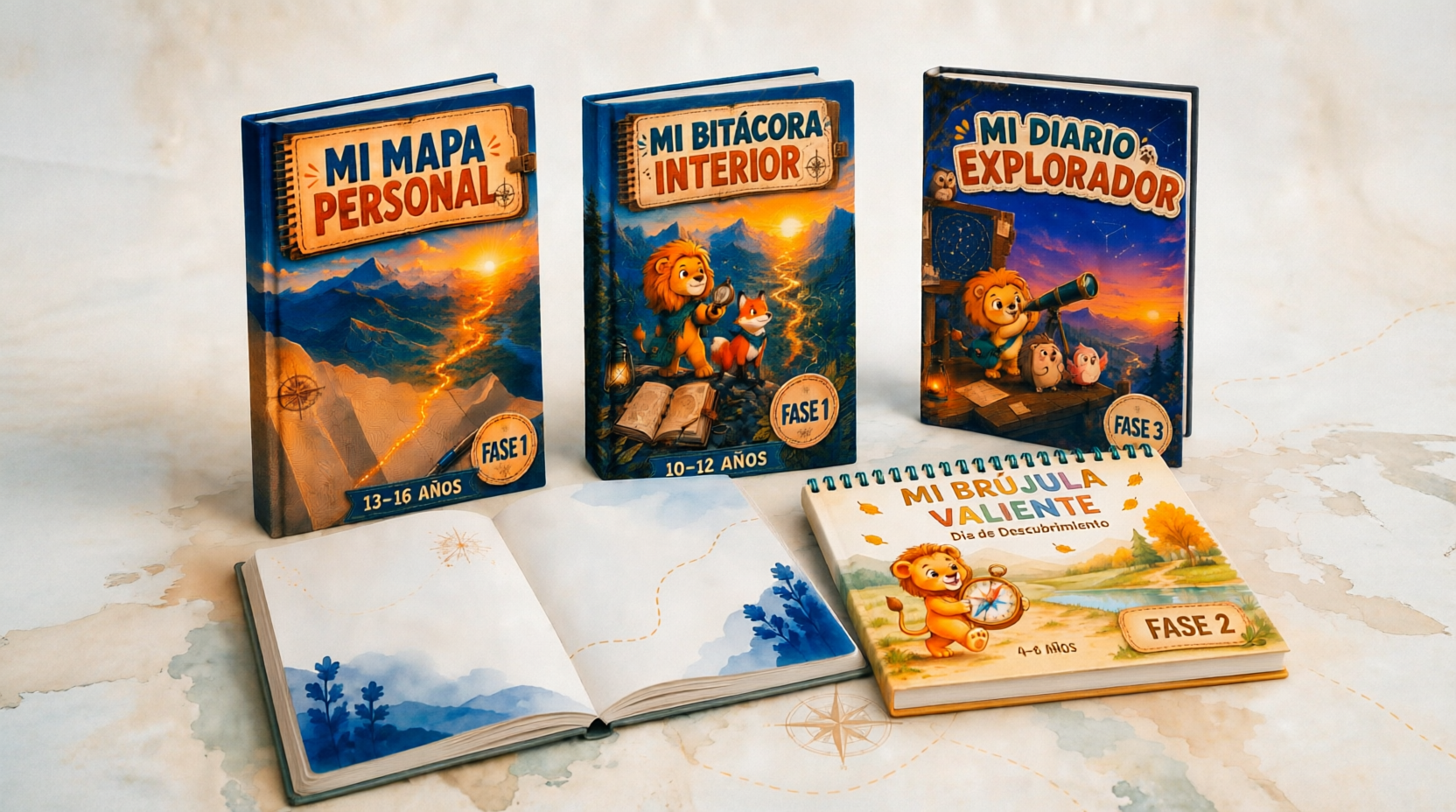
Four journals. Four stages of development. One inner compass.
courage · confidence
ages 4–6

curiosity · paths
ages 7–9

reflection · emotions
ages 10–12

direction · future
ages 13–16
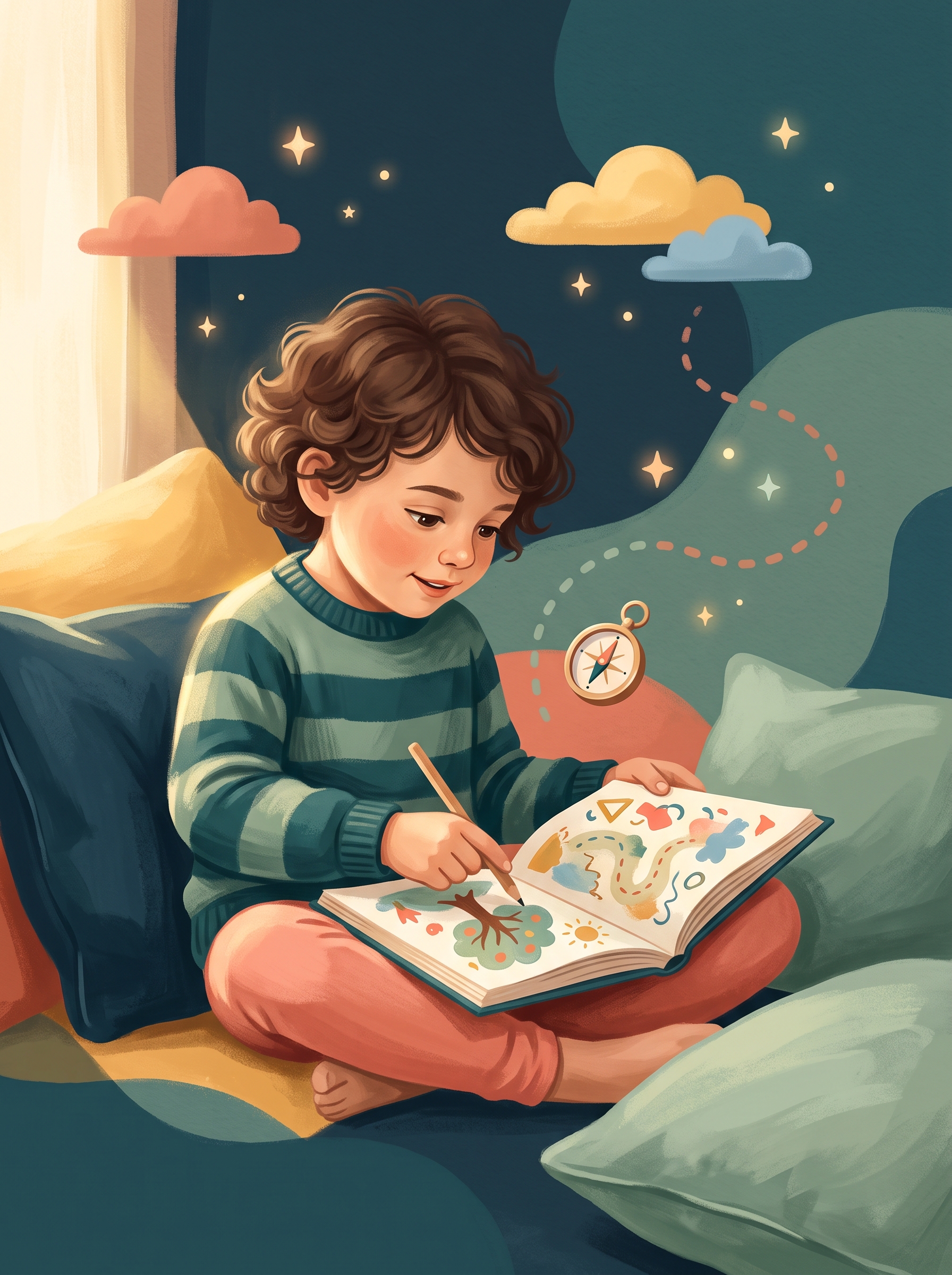
The journals turn each conversation into a concrete practice: writing, observing, revisiting experiences, and building a language of their own.
Designed to support every stage with care, rhythm, and room to think.
We are not looking for intensity.
We are looking for consistency.
When schools, educators, students, and families share a common language, emotional development becomes part of the school culture rather than a one-off activity.
These skills are not learned all at once. They are practiced, named, and made available when they are needed most.
Emotional skills can be learned.
A program rooted in education, psychology, and research on social-emotional learning.
A high-density EEG study with 36 students observed broader brain connectivity patterns during handwriting than typing. A physical journal turns that action into a personal space: it can be customized, opened again, and used for reflection away from a screen.
Reference: Van der Weel and Van der Meer · Frontiers in Psychology, 2024 ↗Frequency matters: brief, manageable daily engagement. We are not trying to fill more time, but to turn a few steady minutes into a habit of reflection.
Inclusion is not an add-on to Brújula Emocional; it is the starting point. The program was created with this in mind. The journals are the same for everyone. Educators receive a guide with varied approaches to include every student.
The design applies Universal Design for Learning principles: an emotional check-in can be colored, pointed to, or left unspoken; the routine sets expectations and reduces uncertainty; and each activity can change format without changing its purpose. This program is distinctive in the market because inclusion is built into the methodology, rather than offered through separate materials or activities for different profiles.
It is an ongoing way to support each person on the path to autonomy.

Brújula Emocional helps create a space for guidance where children and teenagers spend much of their day: at school.
Bring Brújula to my school
InnerCare offers an educational program for schools that supports children and teenagers ages 4–16 in personal development and emotional autonomy, using original materials and a methodology designed to include different ways of learning.
Tell us a little about your school, and we will show you how Brújula Emocional can fit into the school day.